Pipe Relining vs Digging Up Your Pipes: What's the Difference?
Discover the difference between pipe relining and traditional excavation, and how relining can repair damaged underground pipes with less disruption.
Pipe Relining vs Digging Up Your Pipes: What’s the Difference?
When underground pipes become cracked, damaged or blocked, traditional repairs have often meant excavating the area to access and replace the damaged section. But advances in plumbing technology now provide another option: pipe relining.
At Duncan’s Plumbing & Gas, we use pipe relining to repair suitable underground pipework without the need for extensive excavation.
Traditional Pipe Replacement
Traditional pipe replacement involves digging down to the damaged section of pipe, removing the old pipe and installing new pipework.
While this remains the right solution in some situations, excavation can be disruptive — particularly when pipes run underneath driveways, concrete, gardens, landscaping or other established areas.
Depending on the location and extent of the damage, excavation may also involve additional reinstatement work once the plumbing repair is complete.
What Is Pipe Relining?
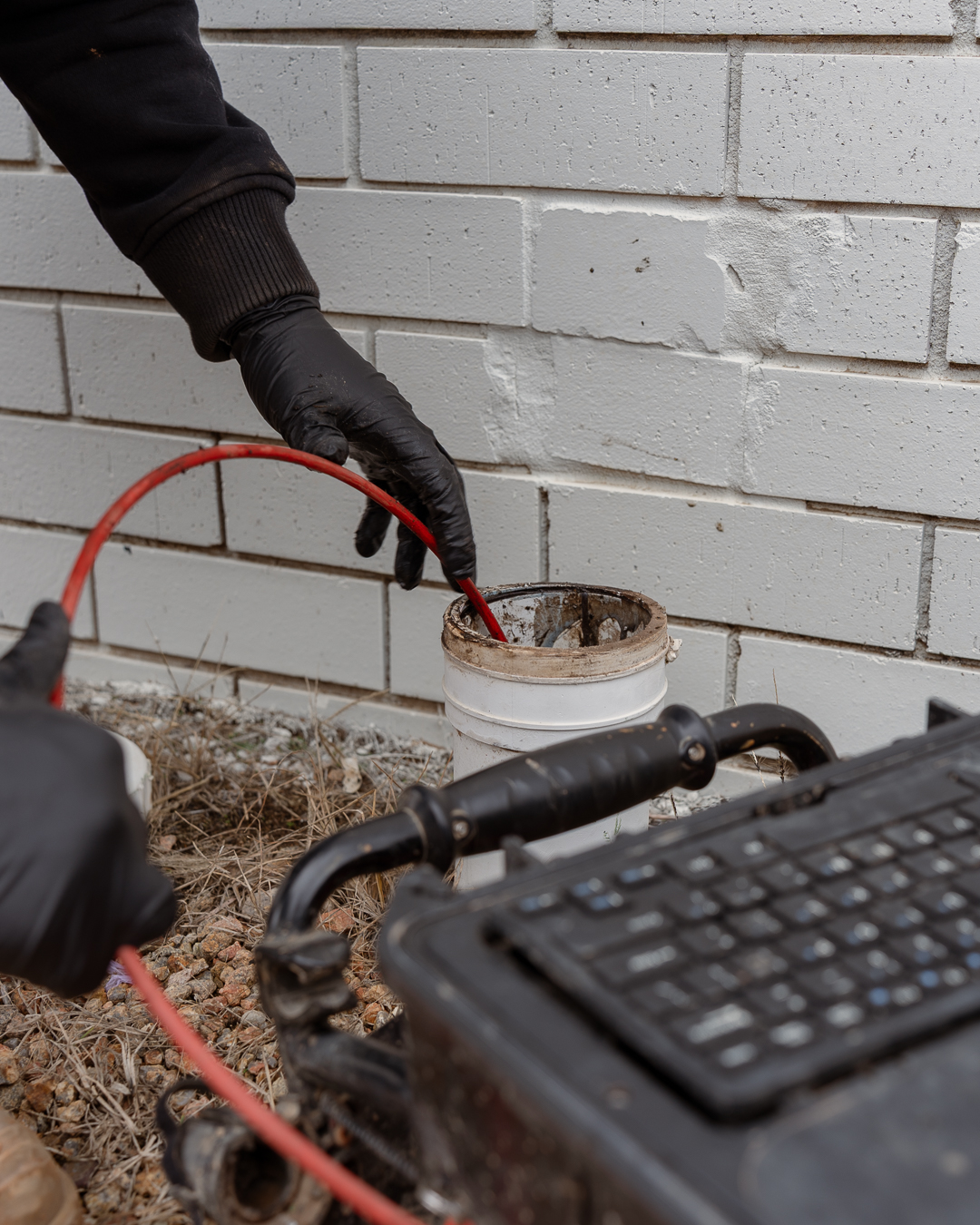
Pipe relining is a trenchless pipe repair method that allows a new pipe to be formed inside the existing damaged pipe.
The process generally involves:
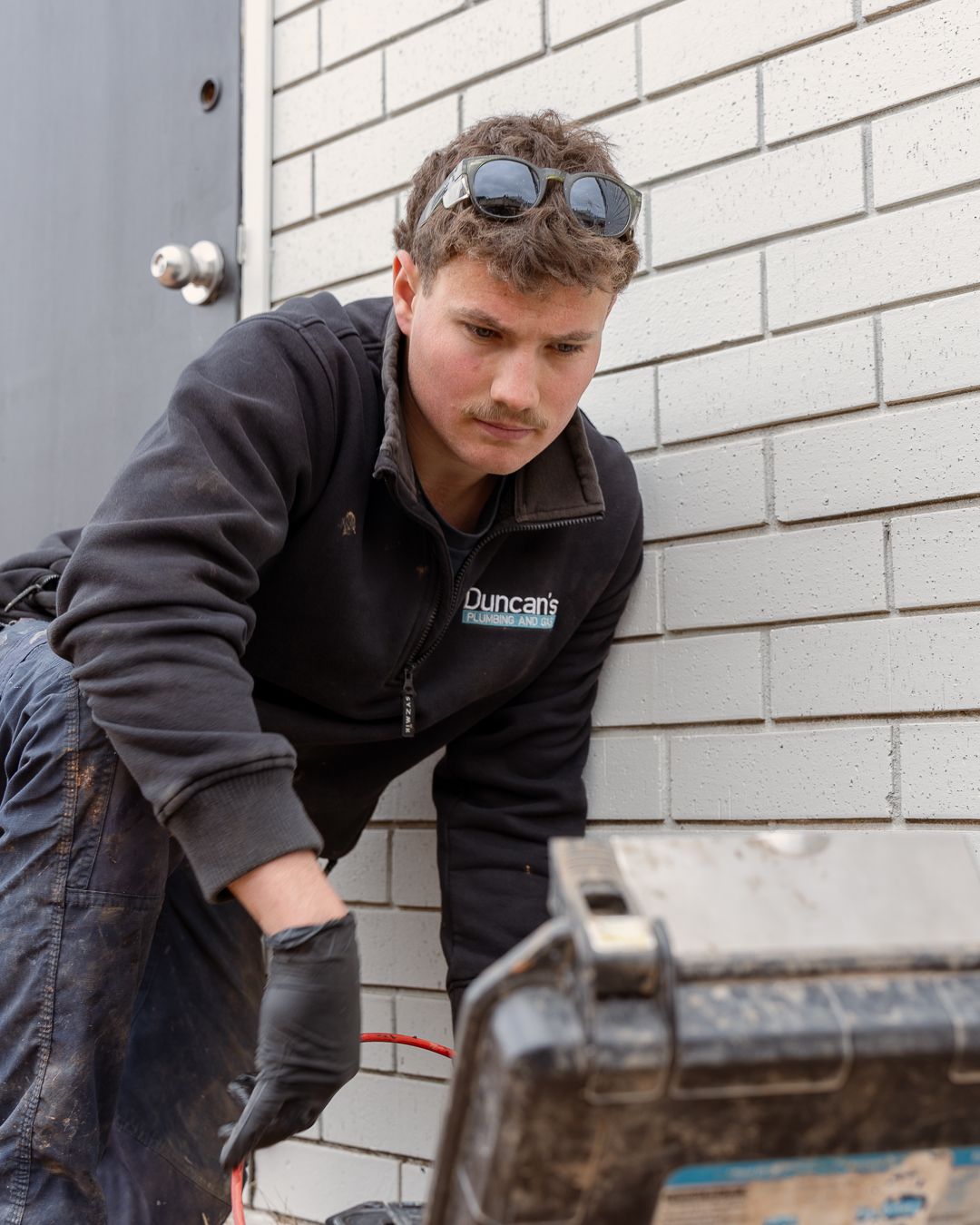
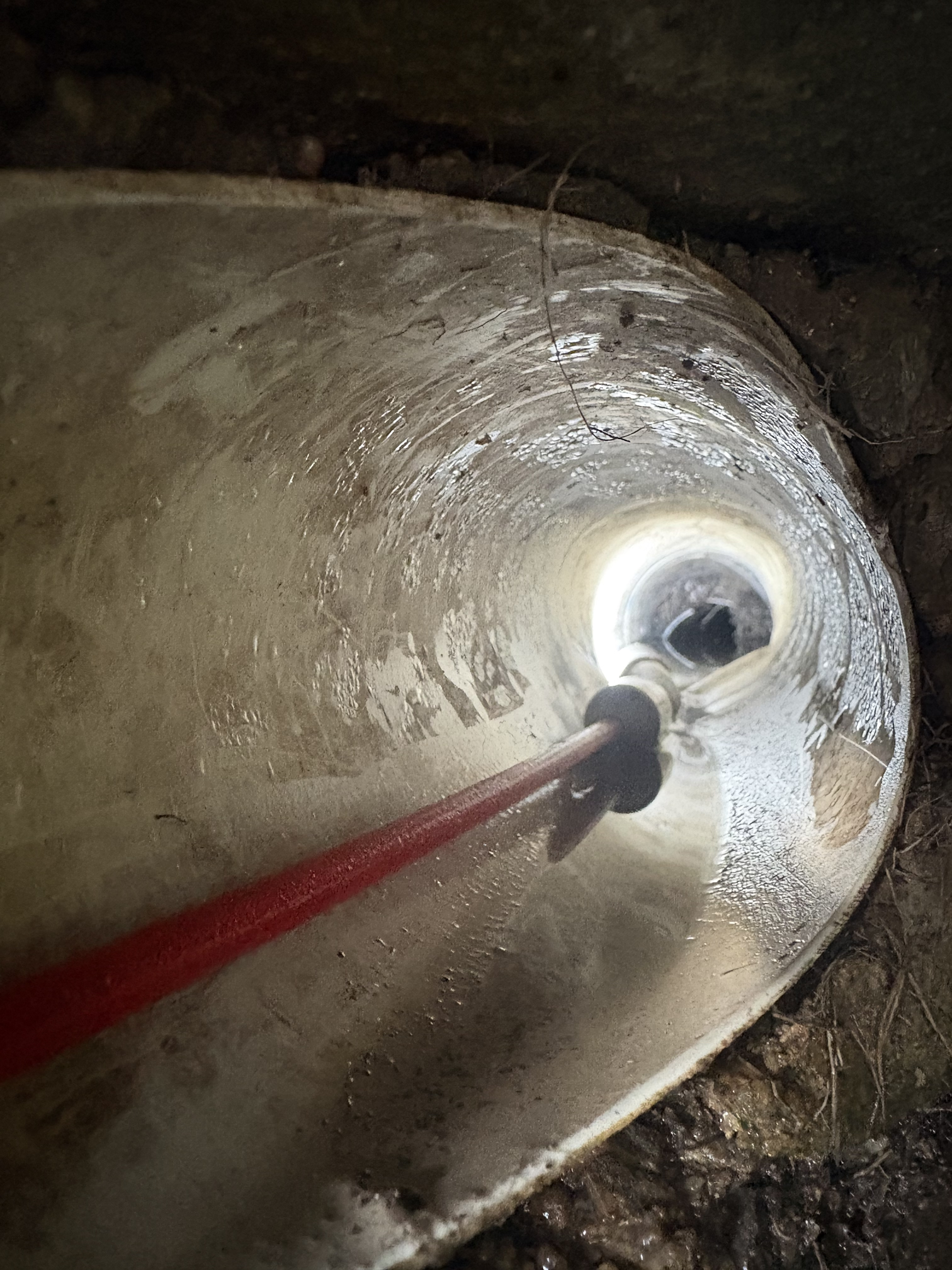
- CCTV inspection – We inspect the inside of the pipe to identify the problem and assess its condition.
- Cleaning and preparation – The existing pipe is thoroughly cleaned and prepared for the liner.
- Liner installation – A specially designed resin liner is installed inside the existing pipe.
- Curing – The liner is cured in place, creating a strong, seamless new pipe within the existing one.
- Final inspection – CCTV can be used to inspect the completed repair and confirm the result.
Pipe Relining vs Excavation
The biggest difference is how the damaged pipe is accessed.
With traditional replacement, the ground above the pipe generally needs to be excavated. With pipe relining, the existing pipe is accessed through existing access points where possible, significantly reducing the need for digging.
This can mean:
- Less disruption to your property
- Less excavation and reinstatement
- Reduced impact on gardens, landscaping and driveways
- A faster and cleaner repair process
- A durable solution for suitable damaged pipework
Is Pipe Relining Suitable for Every Pipe?
No. Pipe relining isn't suitable for every situation.
The condition, size, configuration and location of the existing pipe all need to be assessed before determining whether relining is appropriate. That's why CCTV inspection and professional assessment are an important part of the process.
In some cases, traditional pipe replacement or another repair method may be the more appropriate solution.
A Smarter Way to Repair
If your underground pipework is damaged, you don't necessarily need to dig everything up.
Our experienced team can inspect your pipework using CCTV and assess whether pipe relining could provide a suitable alternative to traditional excavation.
No dig. No fuss. A smarter way to repair.
Contact Duncan’s Plumbing & Gas to discuss your pipework or arrange a CCTV inspection.
Having a problem? We’ll fix it today!
Plumbing emergencies can happen at any time. Whether it’s a burst pipe, a blocked sewer or a sudden hot water failure, Duncan’s Plumbing & Gas is ready to help.